
Loading...


LAND PREPARATION


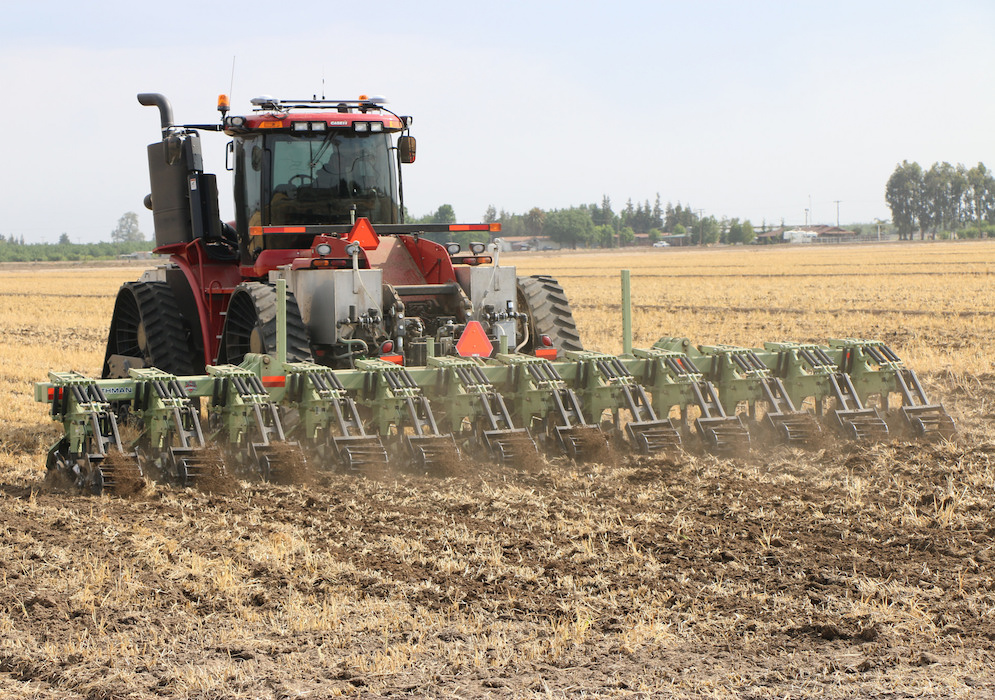
Conservation Tilage

Description:

Conservation tillage is a practice of reducing soil disturbance and allowing crop residue or stubble to remain on the ground or to be incorporated into the soil. Conservation tillage is any tillage practice that retains enough of the previous crop residue, such that 30 percent of the soil is covered after planting

Benefits:

  1. Crop residue on fields acts as a mulch to protect soil from erosion
  2. Promotes soil productivity by feeding the biology which increases the soil's organic matter
  3. Stable soil aggregated increases soil absorbency and infiltration rates, while fostering root establishment and growth.
  4. Reduce soil erosion and agricultural runoff.
  5. Promotes water conservation by reducing evaporation, which is important for areas affected by severe drought.
  6. Less time and resource intensive, which improves overall cost effectiveness of farmer.

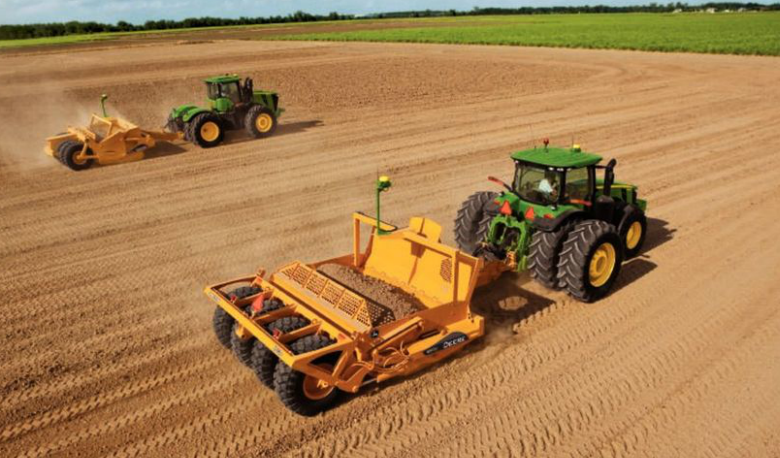
Land Leveling

Description:

Land levelling is a process of flattening or modifying existing slopes or undulations rather than necessarily creating a level surface as the name may imply.

Benefits:

  1. Improved crop establishment, even water coverage of the field, even crop stand and maturation,
  2. Reduction of weeds by up to 40 % (thereby a 75 % decrease of labour required for weeding),
  3. Increase of farming area by 5-7 %,
  4. Reduction of farm operation times by 10-15 %.
  5. Average yield increase of 10- 20 %
  6. Leveling reduces the time needed for transplanting and for direct seeding.
  7. Good leveling may reduce total water requirement to grow the crop by up to 10%.

PLANTING STAGE


Part 1

Planting Date

Description: Planting date management is a very important step and the optimal planting date would help achieve early fruit set, establish strong fruit retention, and make the most of the primary fruiting cycle. Achieving earliness in a cotton crop is also important for insect management considerations, and to minimize exposure of the primary fruiting cycle to the hot, humid monsoon weather which increases fruit loss and abortion.

Benefits: Selection of planting date has a profound impact on crop yield.

Part 2

Seed Selection

Description: Seed selection is a very important step in cultivation and crop varieties are developed to be more drought tolerant, resistant to water logging, tolerant to salinity, resistant to pests, etc.

Benefits: A suitable crop variety can impact the overall water footprint in multiple ways such as reducing transpiration without lowering the yield and stabilising the yield despite adverse conditions that can lead to reduction in crop yield.


Part 3

Crop Rotation

Description: Crop rotation is the practice of growing a series of dissimilar or different types of crops in the same area in sequenced seasons. As a general guidance an annual rotation of crops with different root systems is recommended.

Benefits: Crop rotation reduces soil erosion, increases soil fertility, helps pests control and improves crop yield. It is a good practice that can either reduce, or at least maintain the current level of the grey water footprint of crop production because of reduced application of pesticides.

Part 4

Intercropping

Description: Intercropping is a practice of growing two or more crops simultaneously on the same piece of land. Types of intercropping are, in general: mixed intercropping, row intercropping, strip intercropping, and relay intercropping.

Benefits: As an alternative to monoculture, intercropping can improve soil moisture retention and reduce unproductive evaporation due to increased soil cover resulting in water footprint reduction. It provides crop residue (green manure) that can be incorporated into the soil to improve soil nutrients and build a favourable soil structure. It may reduce pesticide use due to suppressing weeds and controlling pests. If Nitrogen-fixing plants are used, less fertilisers will be needed.

GROWING STAGE


SURFACE FLOODING

Fresh water is taken out of a river, lake or reservoir and transported through an open canal system to the farm field and applied as a sheet of water with the help of gravity to spread over the land. Losses of fresh water occur through evaporation, seepage and inefficient water management.

SPRINKLER IRRIGATION

Sprinkler irrigation is a method of applying irrigation water that mimics natural rainfall. Water is distributed through a system of pipes usually by pumping. It is then sprayed into the air through sprinklers so that it breaks up into small water drops that fall to the ground.

SFURROW IRRIGATION

Furrow irrigation is a type of surface irrigation in which water is released into the furrows, often using gravity, and it seeps vertically and horizontally to enrich the soil moisture. Alternate furrow irrigation results in a reduction of water application, without significantly affecting yield and tmore efficient water use.

DRIP IRRIGATION

Drip irrigation systems commonly use tubes that are placed on the soil surface next to the crop to apply irrigation water with high precision. Due to the application of water nearer to the root zone of the crop, the unproductive evaporation from the surrounding land is avoided.